
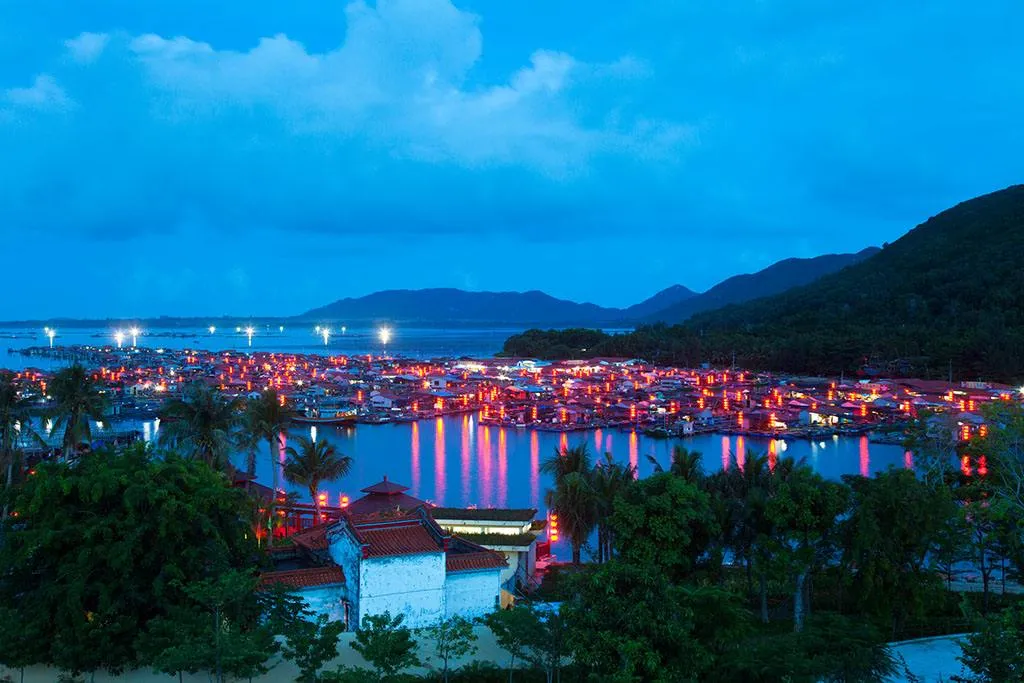
In the Jin Dynasty, Zhang Hua wrote in the Annals of Natural History, Volume 10,”The old saying is that the river and the sea are connected.In recent times, some people lived in the sea islets, every August there is a floating raft come. There was a young man who had a whimsical idea to build a high pavilion on a wooden raft,so he brought a lot of food and set out from the blue sea on the raft, sailing with the wind and waves to the star.This is a mythical story from the coastal area, the natural landscape of the coastal area where the water and the sky are connected will prompt people to form the imagination of the sea and the sky.Taking the raft to the sea is also a common behavior of the residents of the coastal area.The Story of The August Floating Raft was considered by the ancients as a channel and bridge between the sea and the sky, reflecting the ancient imagination of the sea and their desire to explore the unknown territory.
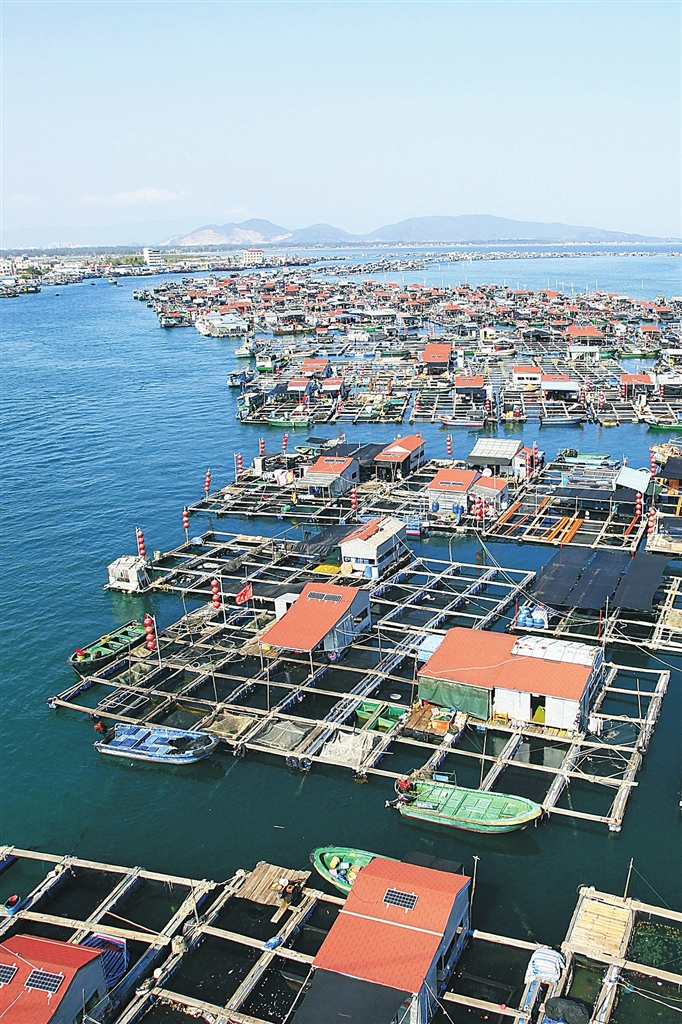
The boat-dwelling people recorded in the Yazhou Chronicles are a group of traditional Hainan society with boats as their home and they live on the sea.The “Dadan Port and Baoping Port” mentioned in “Yazhou Chronicle” are located near the cultural and sports center of Sanya Yazhou Bay Science and Technology City.Inside the fishing raft are furnished with beds, stoves , however, the entrance and windows are as small as cages, and they can be closed every time there’s a big storm.For generations, the boat-dwelling people have lived on the sea. They live on boats and wander indefinitely so they are also known as sea gypsies. They live on the floating raft, and it is their fate to drift on the sea,survive on the ocean. After thousands of years of development and accumulation , the boat-dwelling culture and beliefs are one of the most important representatives of Hainan’s native culture and it provide great support for Hainan’s cultural diversity and heritage.
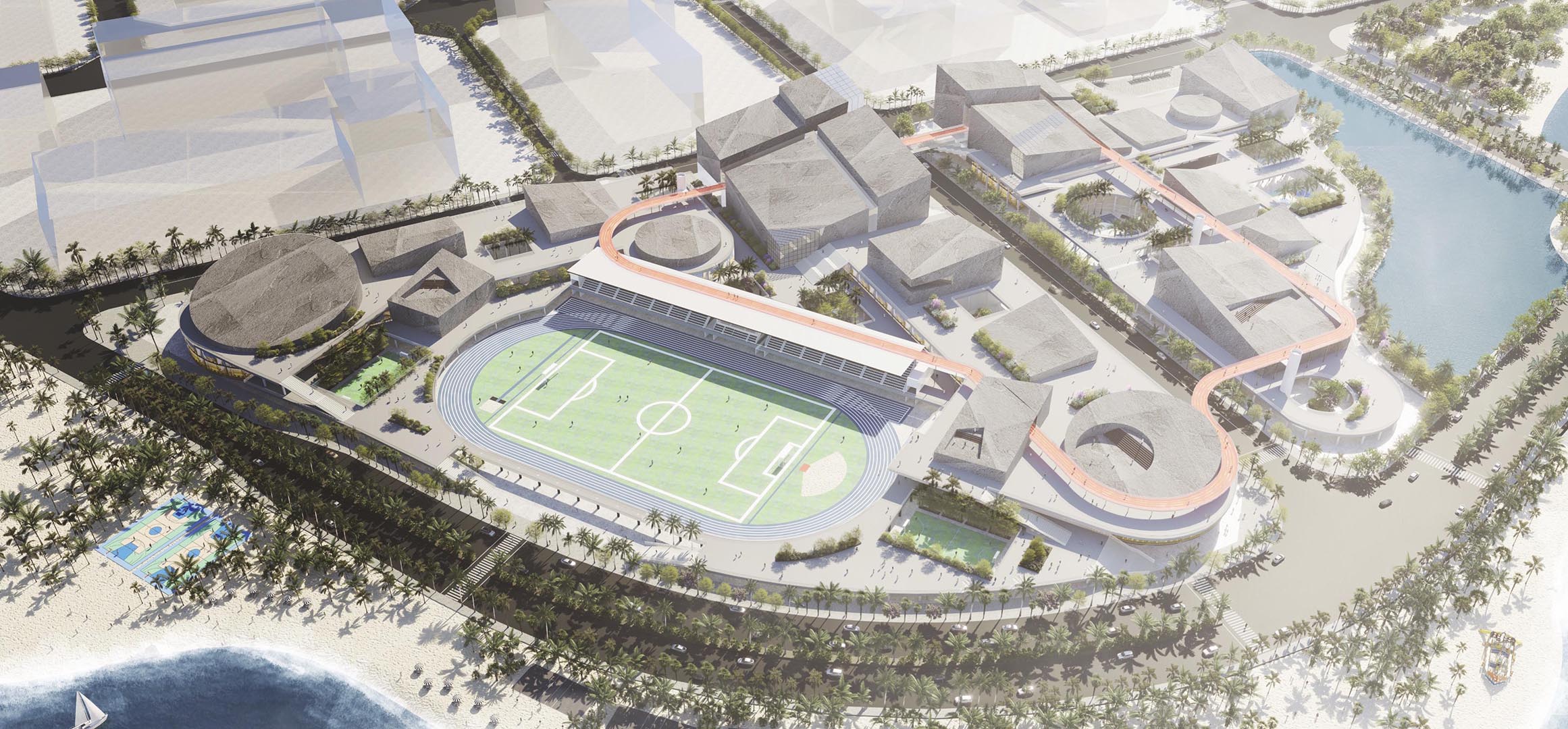
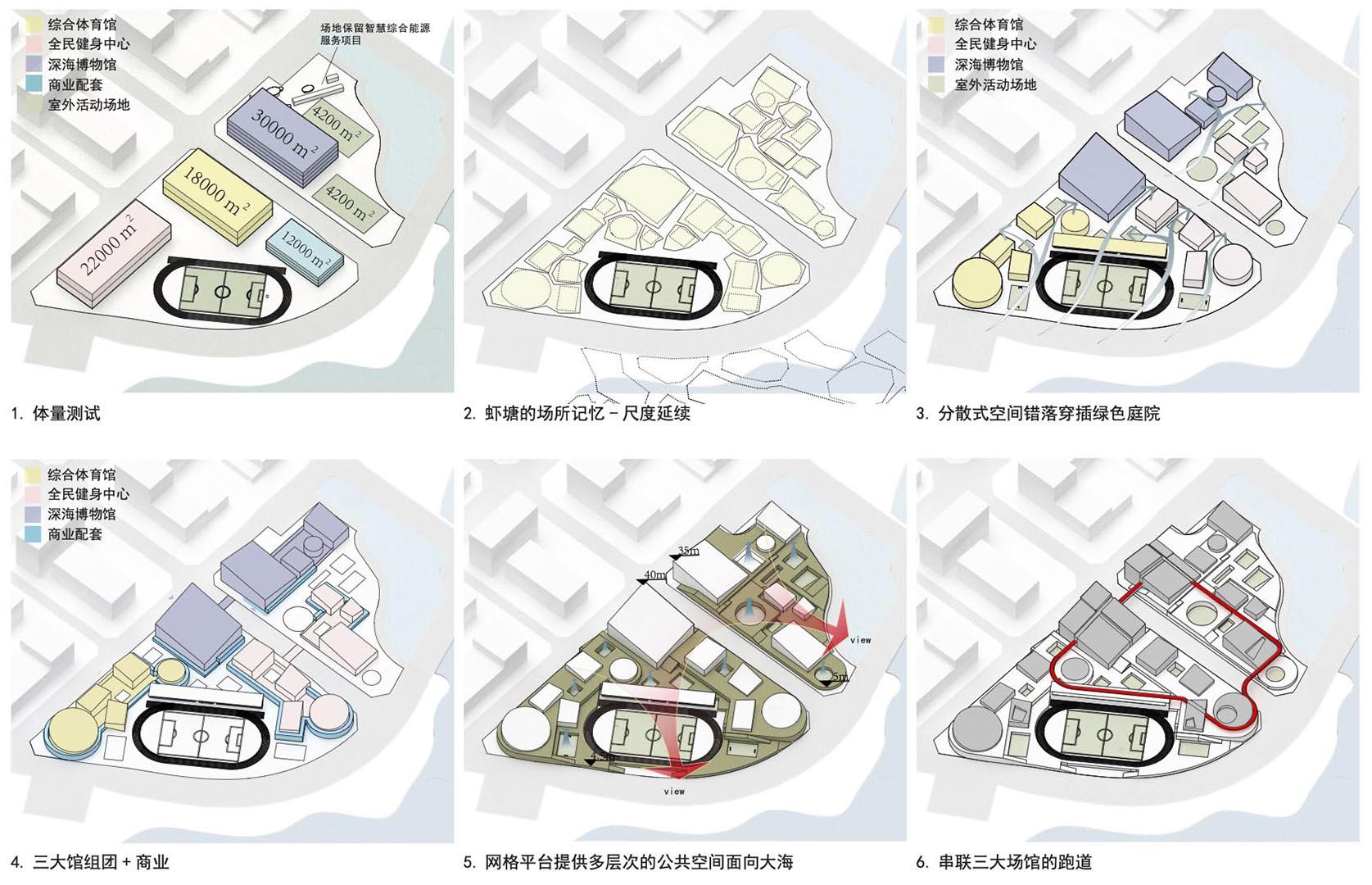
The genius loci (Tech Bay Shrimp Pond) – The historical rudiment of place give the space its character. Shrimp pond farming is a traditional farming method in Yazhou District, Hainan, and it is also one of the local fisherman’s ways of production and life, which shows the wisdom and carries the collective memory of them. The shrimp pond is an important source of survival and a precious treasure for the local people, representing their deep affection for the sea and their awareness of ecological environment protection. The cultural interpretation of the site’s memory continues the scale texture of the traditional shrimp pond. The interpretation of the memory culture of the site shows the scale texture of the traditional shrimp pond, thus breaking up the huge volume required by the original base and create a porous spatial texture.
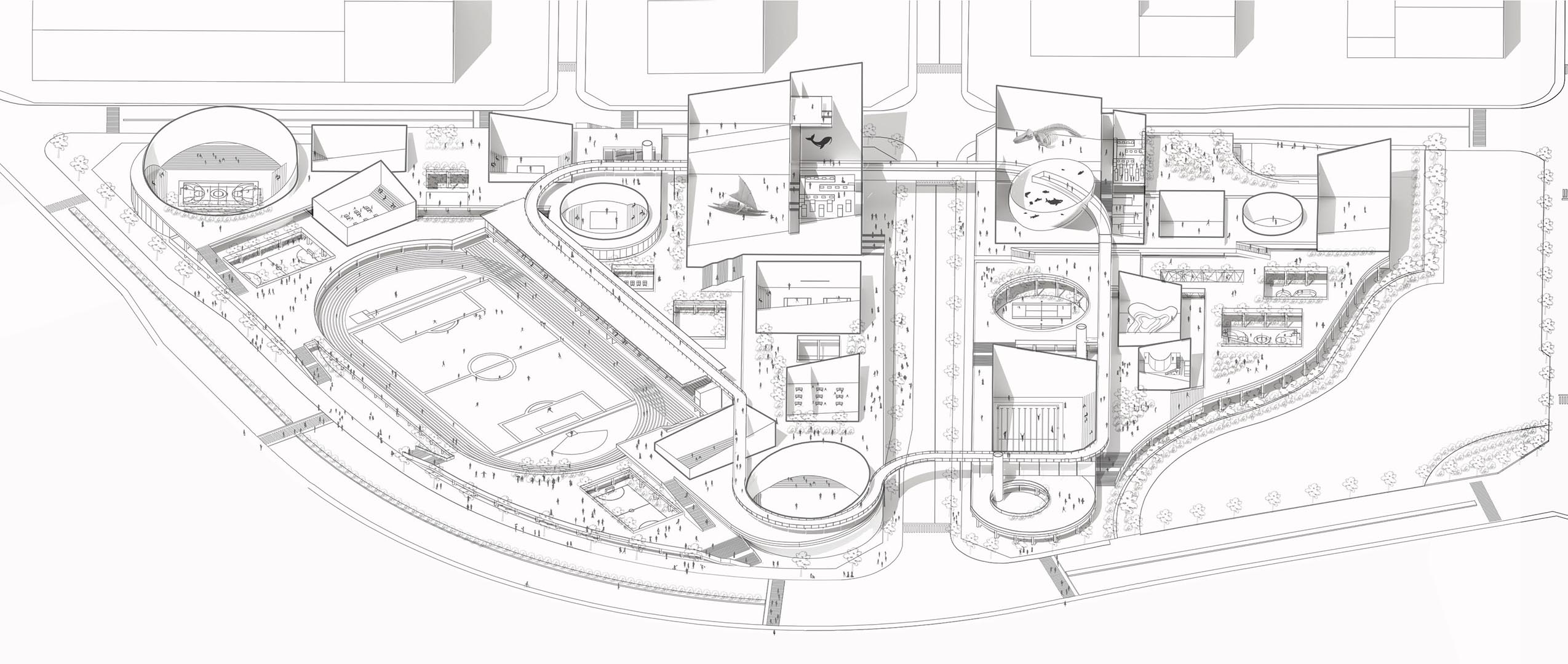
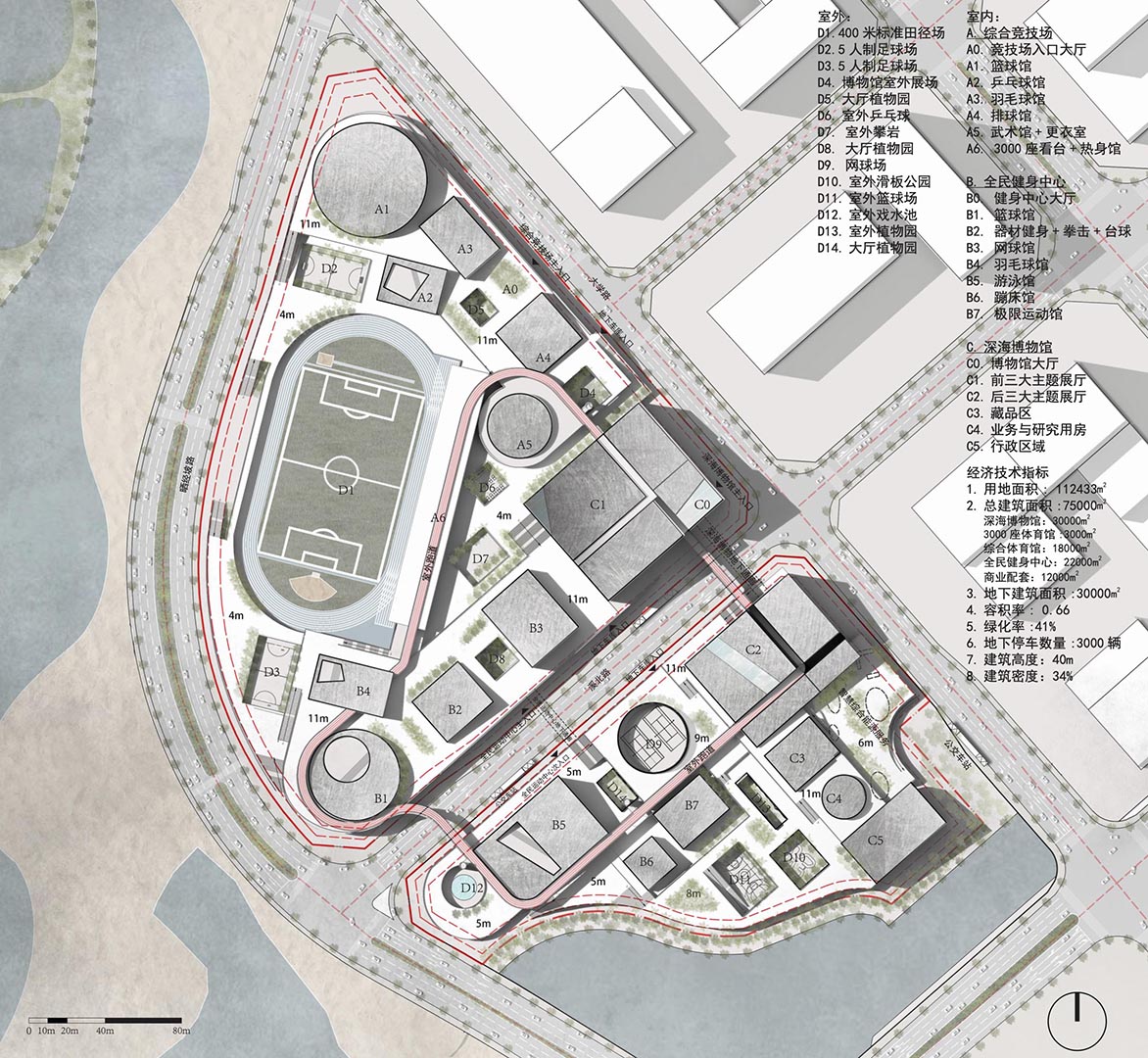
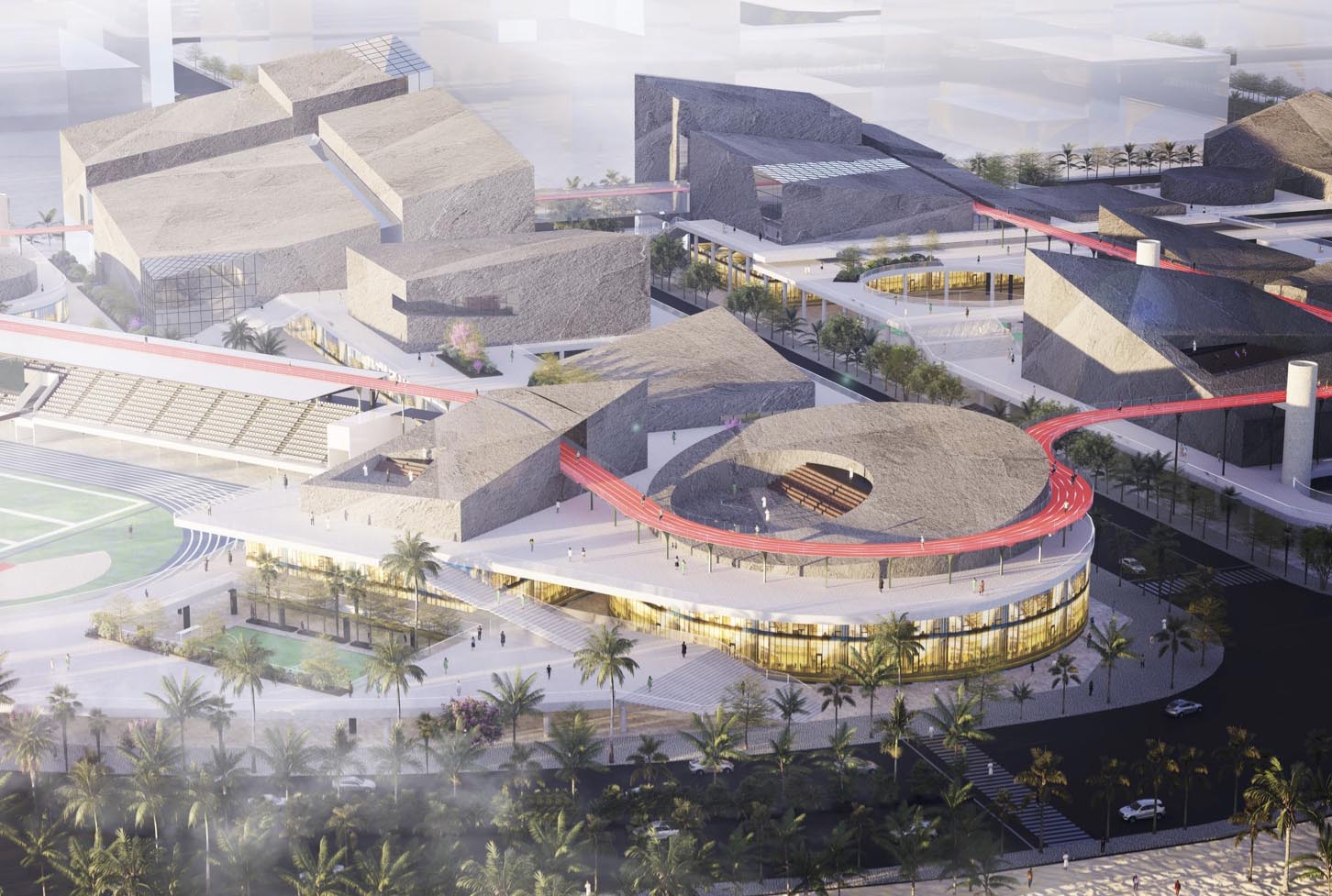
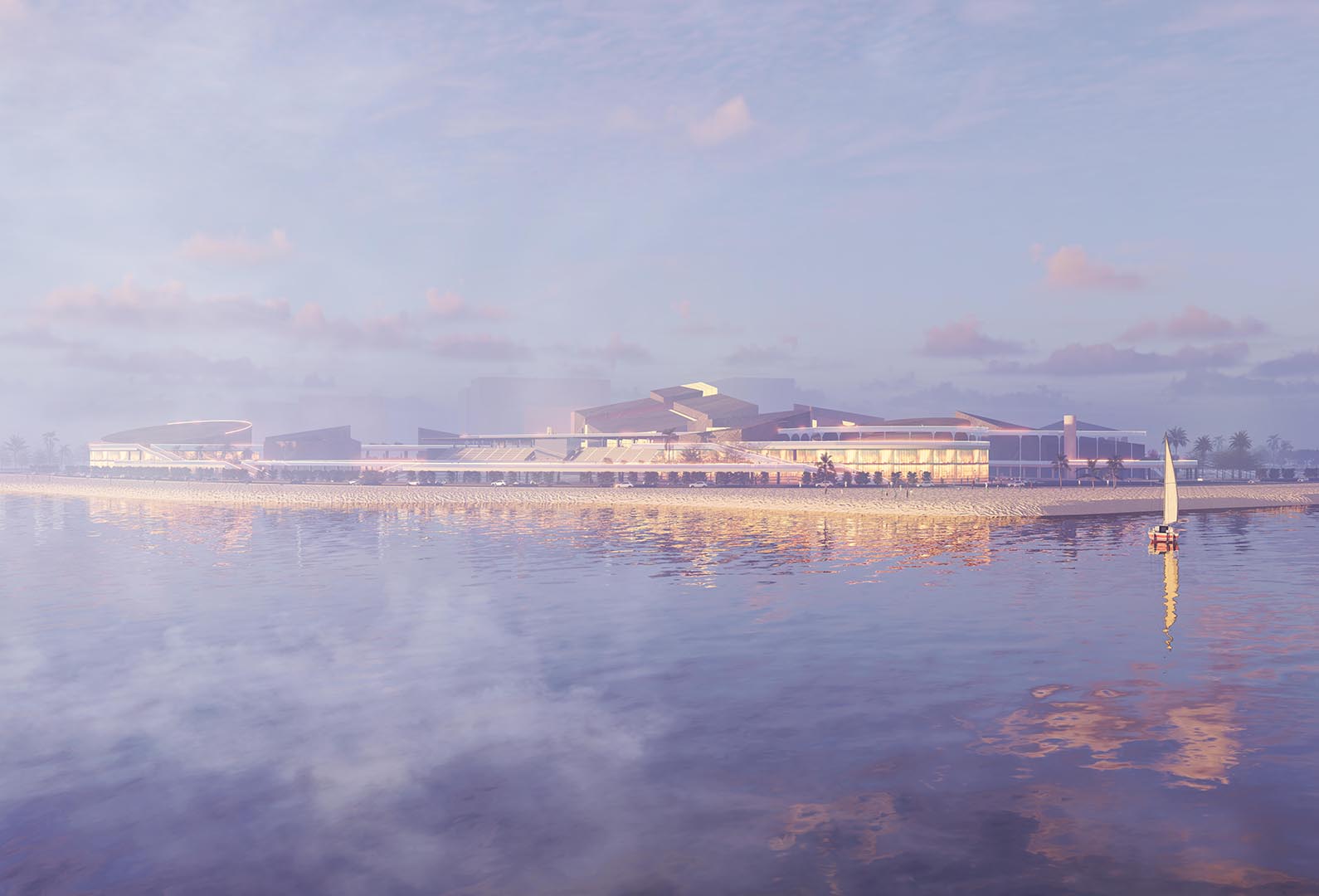
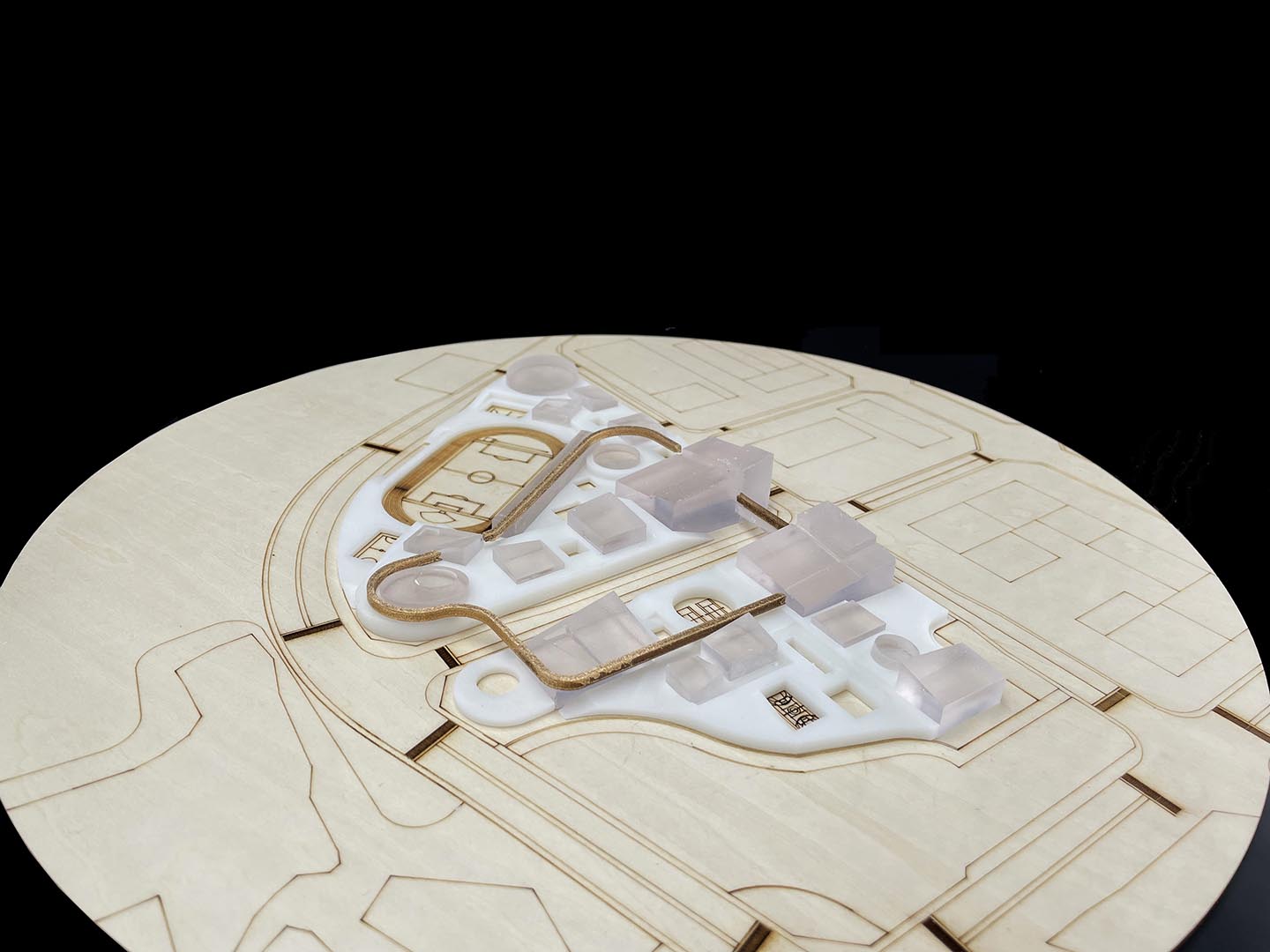
A. Porous public platform: The cultural and sports center on the top of the “floating raft” is mainly a combination of small-scale porous spaces, and a vertical public space grid is laid on top of it from high to low to provide public participation. The grid gradually decreases from the direction towards the sea, and the activity at different levels of the space can generate sight intersection with the sea.
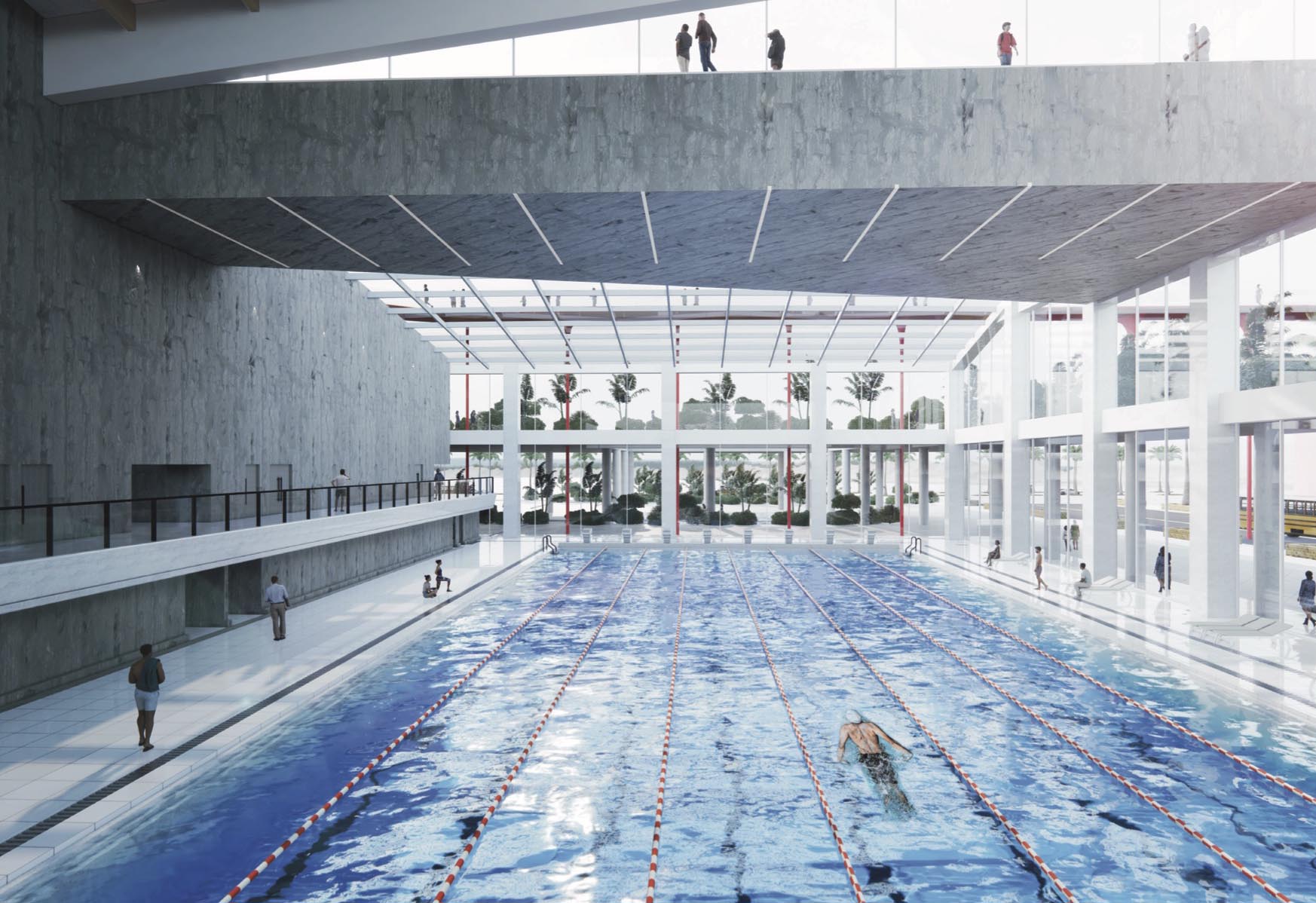
B Tandem track: A sports track connects the Basketball hall, badminton hall, swimming pool, competitive martial arts hall, and deep Sea Museum, of the National Sports Center, integrating the east and west plots. Shuttling through the museum space allows more citizens to participate in and experience the deep-sea culture of Hainan, and the closed museum becomes open to the outside world.
A. Scattered blocks: In view of the subtropical climate and weather conditions in Sanya, individual venues on the first floor are scattered, forming gaps between buildings and interspersed with green courtyards of different sizes, creating ecological landscape micro-environment, and breaking up the original large volume into different micro-landscape.
B. Ecological grid platform: On the scattered spaces, a public space grid platform is covered, providing a multi-dimensional activity space facing the sea. In summer, the multi-porous ecological platform brings more light and ventilation, effectively reduces energy consumption and carbon emission. In summer, the porous ecological platform brings more light and ventilation, effectively reducing energy consumption and carbon emissions. The gray space on the first floor is used to provide more sunshade and summer semi-outdoor activity space .Through hot pressure ventilation, the air flow of the site is driven to provide a cooler outdoor environment, constituting a powerful ecological air conditioning system.