
Foshan Primary School

In Nietzsche’s “Thus Spoke Zarathustra,” he describes the three metamorphoses of the spirit that humans seek, progressing from a camel burdened in the desert, to a lion, and finally to a child. This illustrates the advancement of three spiritual states. “The child is innocence and forgetting, a new beginning, a game, a self-propelled wheel, a first movement, a sacred ‘Yes.’ For the game of creation, my brothers, a sacred ‘Yes’ is needed: the spirit now wills its own will, and he who had been lost to the world now conquers his own world.”

Client

Shunde District Education bureau, Shunde district agent construction center

Type

Architecture, Urban

Year

2022

Status

Concept

Size

36984 m²

Location

Rotterdam

Team

Kai Wang, Jordan Yerbury, Jiarong Yao, Jiayu Zhang, Yiran Li, Shijia Chen, Hongyi Li

In Nietzsche’s Thus Spoke Zarathustra, he describes the three metamorphoses of the spirit that humans undergo: first as a camel burdened in the desert, then as a lion, and finally as a child, representing a progression of three spiritual states. “The child is innocence and forgetting, a new beginning, a game, a self-propelled wheel, a first movement, a sacred ‘Yes.’ For the game of creation, a sacred ‘Yes’ is needed: the spirit now wills its own will, and he who had been lost to the world now conquers his own world, unafraid to embrace a new future.” Japanese writer Hayao Kawai noted: “In the world of children, curiosity always abounds, which is why they seek answers from adults. At other times, they engage in deep thought. In this way, children accumulate knowledge and gradually construct their own worldview.”

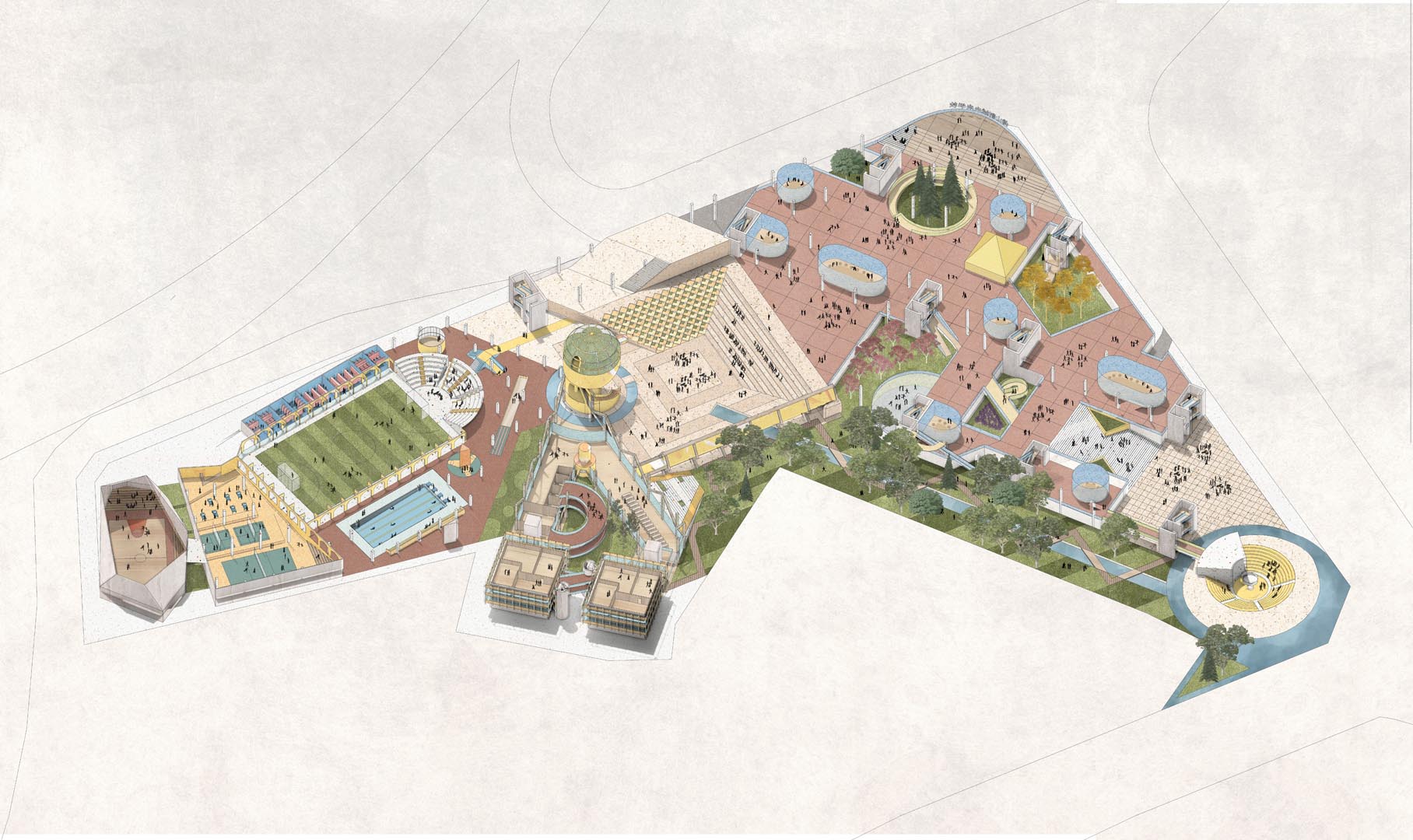
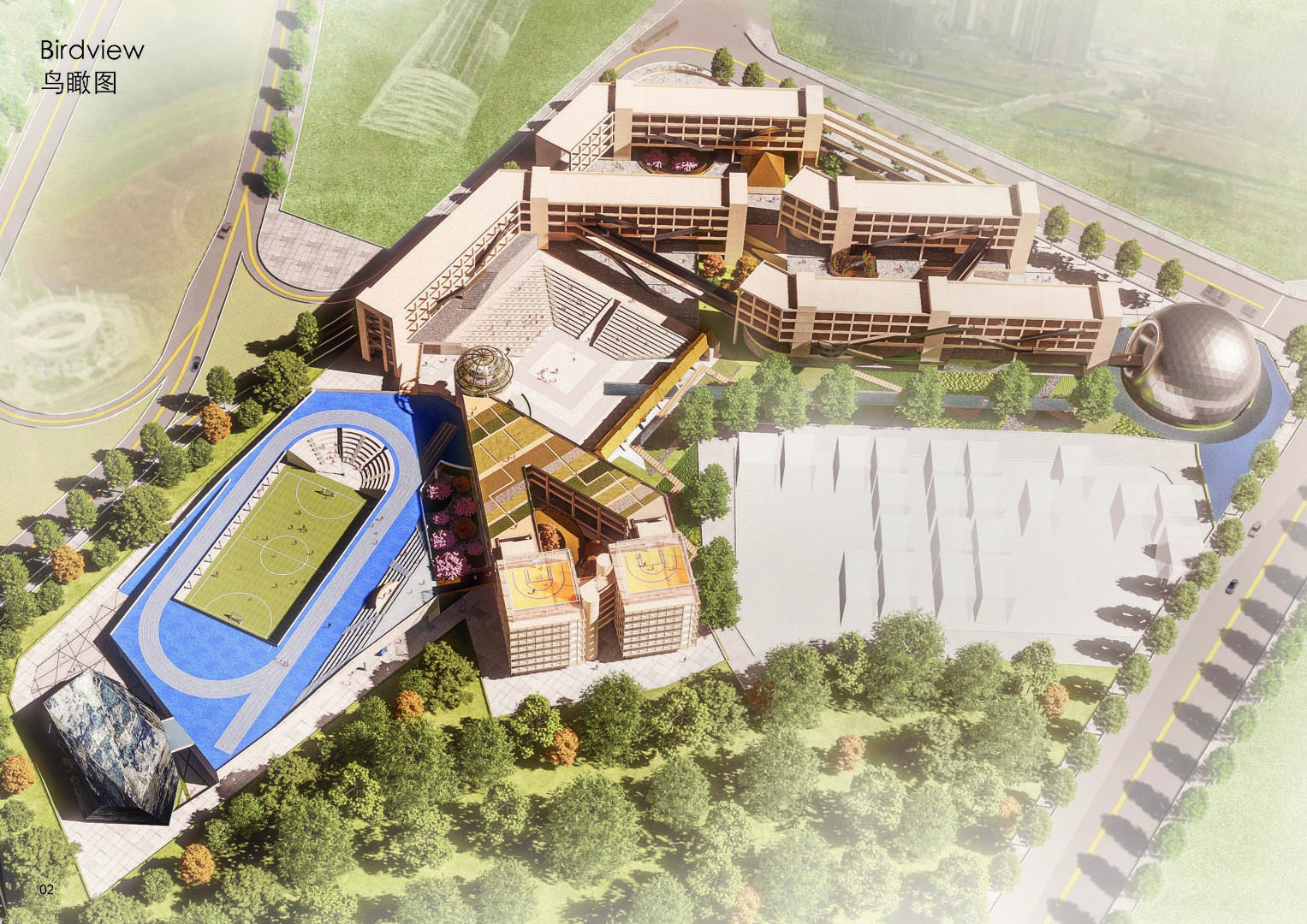
“Funtopia” is a spatial model designed to inspire children’s innate nature. Children aged 5–11 explore and create their own learning methods based on their interests. Through abstract and flexible spatial connections, the learning process stimulates children’s curiosity, which is then integrated into the educational framework, allowing children to immerse themselves freely and effortlessly in the joy of learning. The Funtopia space itself is an open encyclopedia, respecting each child’s individualized world.

A. Funtopia for Diversity
The theme of Funtopia is learning. Beyond traditional classroom immersion, children need diverse learning approaches that involve more social interaction and contact with nature. The space itself provides a platform for various learning methods, expressed through diverse architectural forms. For example, developing photos in a photography darkroom, firing pottery in a ceramics studio, reading in a library, learning to make butterfly specimens in a botanical garden, or rehearsing dance in a studio—each activity space, with its specific proportions, lighting, and spatial relationships, offers unique possibilities. By inviting professionals from various fields to engage with the space, students can enhance their abilities in multiple dimensions.

B. Funtopia for Nature
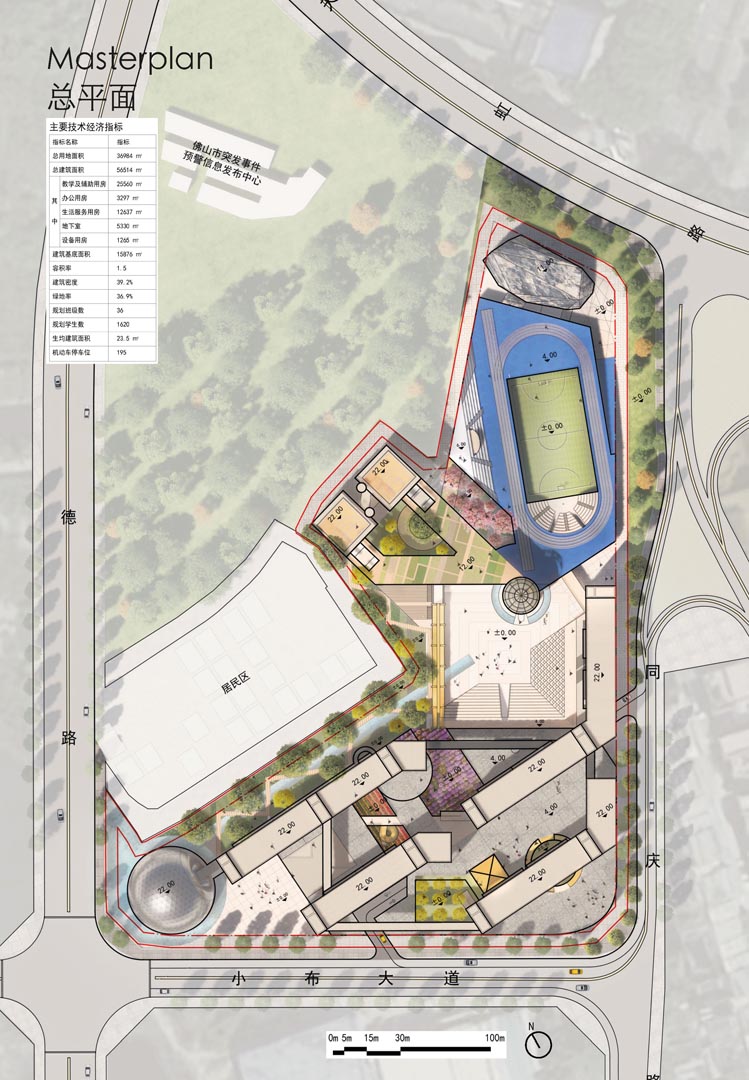
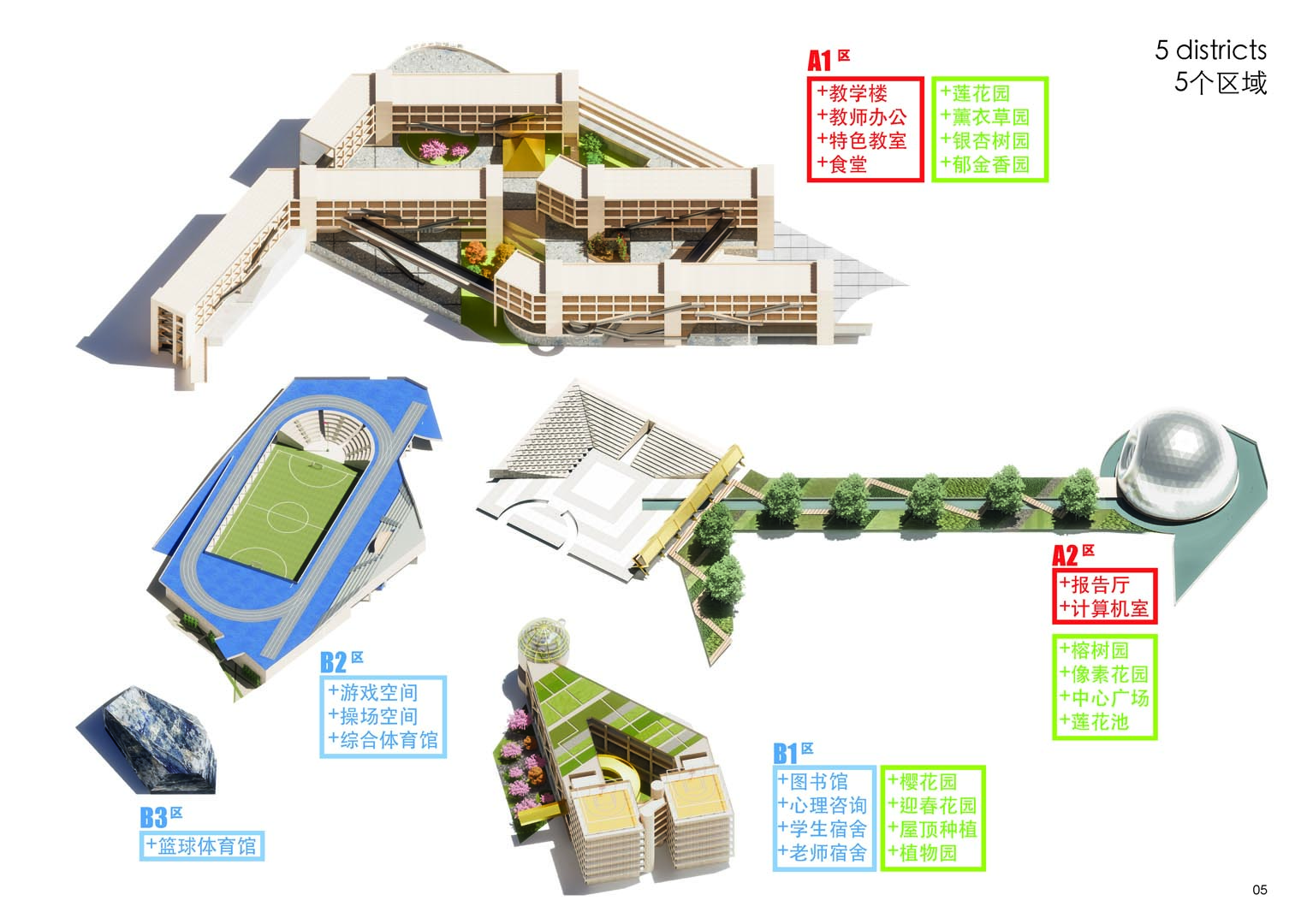
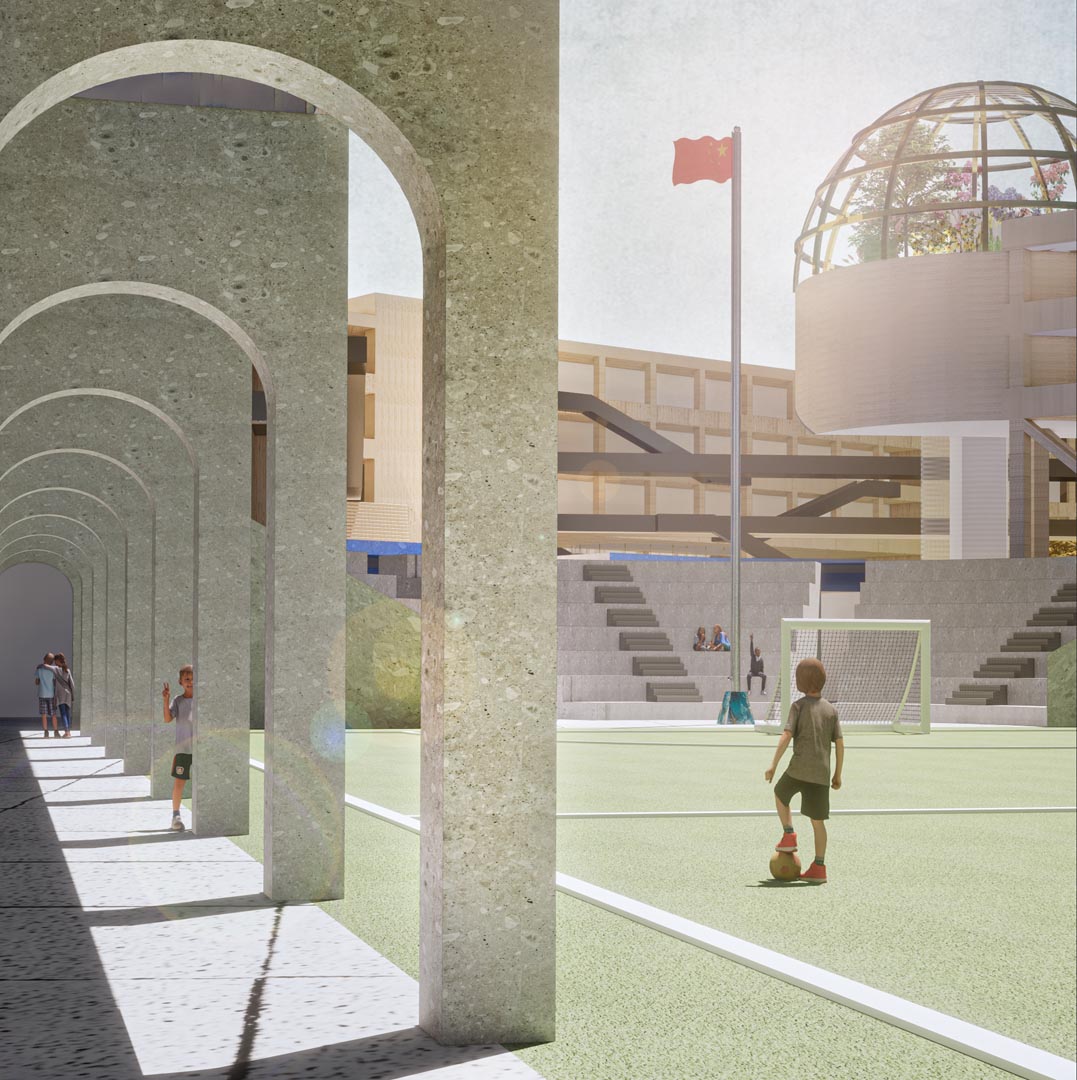
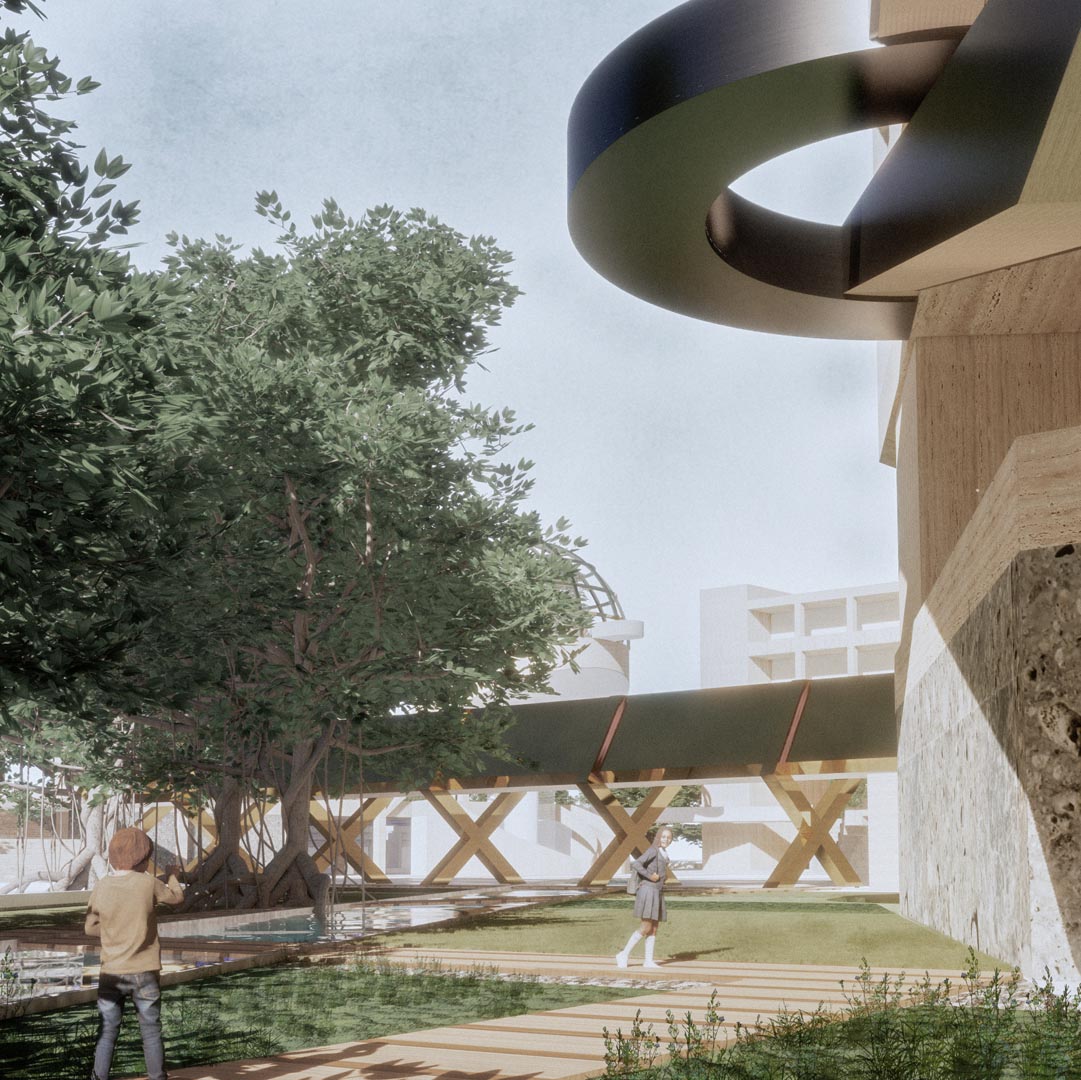
Another key feature of Funtopia is its emphasis on connecting with nature. Through the integration of themed courtyards of varying scales, diverse learning spaces are woven into the botanical garden, ensuring comfort while maintaining the independence of each area. The courtyard themes are linked to local Foshan flora, and existing banyan trees on the site are preserved to create an elongated banyan tree park. In the specialized teaching spaces of Zone A1, themed gardens featuring lavender, tulips, ginkgo trees, and others are incorporated, providing both botanical education and a more pleasant learning environment. The rooftop planting garden in Zone B1 allows children to cultivate an interest in growing crops and connects to a domed botanical area for butterfly breeding, fostering an understanding of natural ecological chains.

C. Funtopia for Abstraction
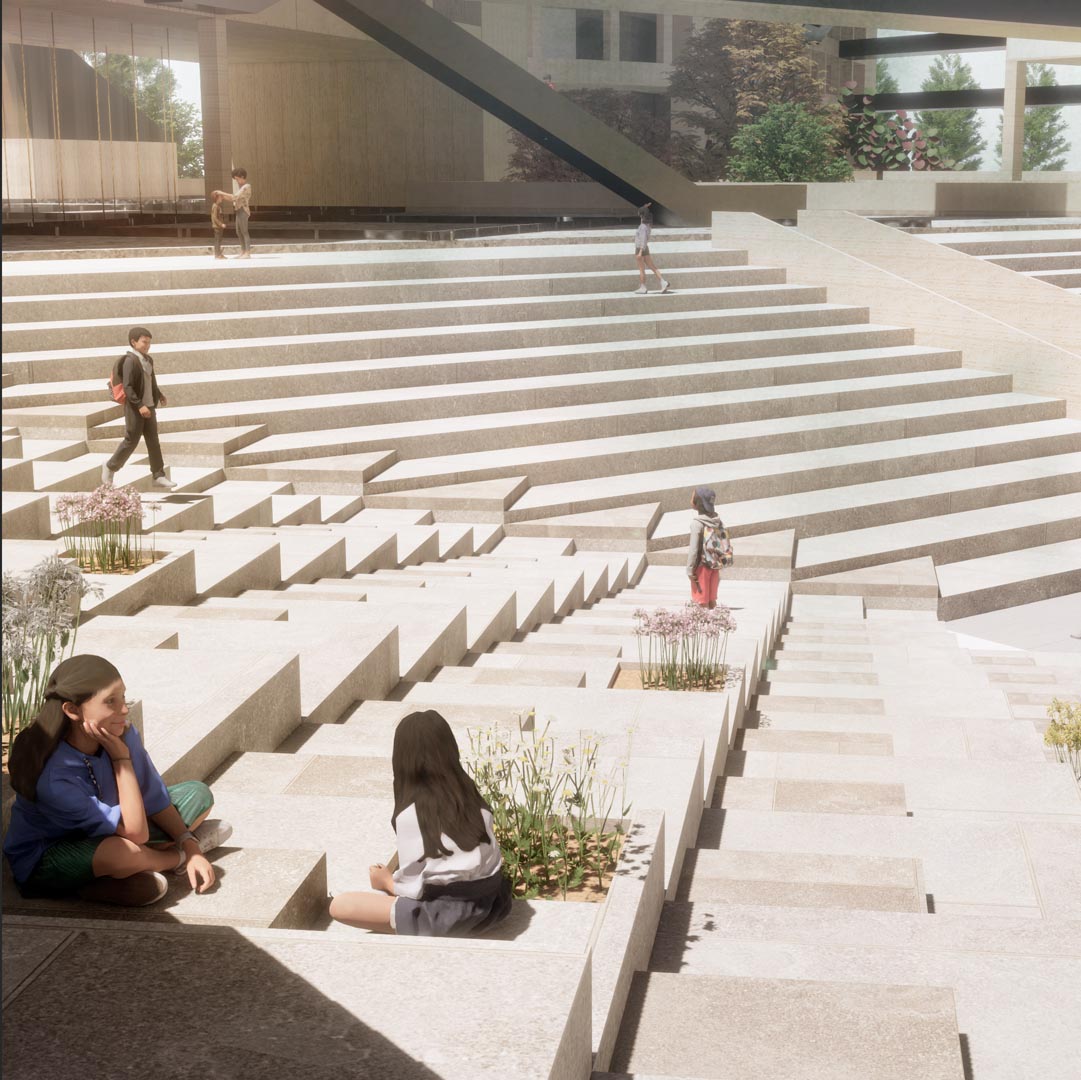
Simplicity and abstract affordance—a concept developed by American psychologist James J. Gibson as part of ecological psychology—center on the principle that our environment not only supports movement but also offers possibilities for action, known as “affordances.” Dutch Structuralist architect Aldo van Eyck utilized the aesthetic value of abstract geometric forms to make play elements more open and adaptable. This abstract “blank space” allows children to exercise greater imagination and creativity, unleashing their innate potential rather than confining them to rigid rules. Thus, the use of versatile geometric prototype spaces encourages greater imaginative exploration.

D. Funtopia for Superimposition
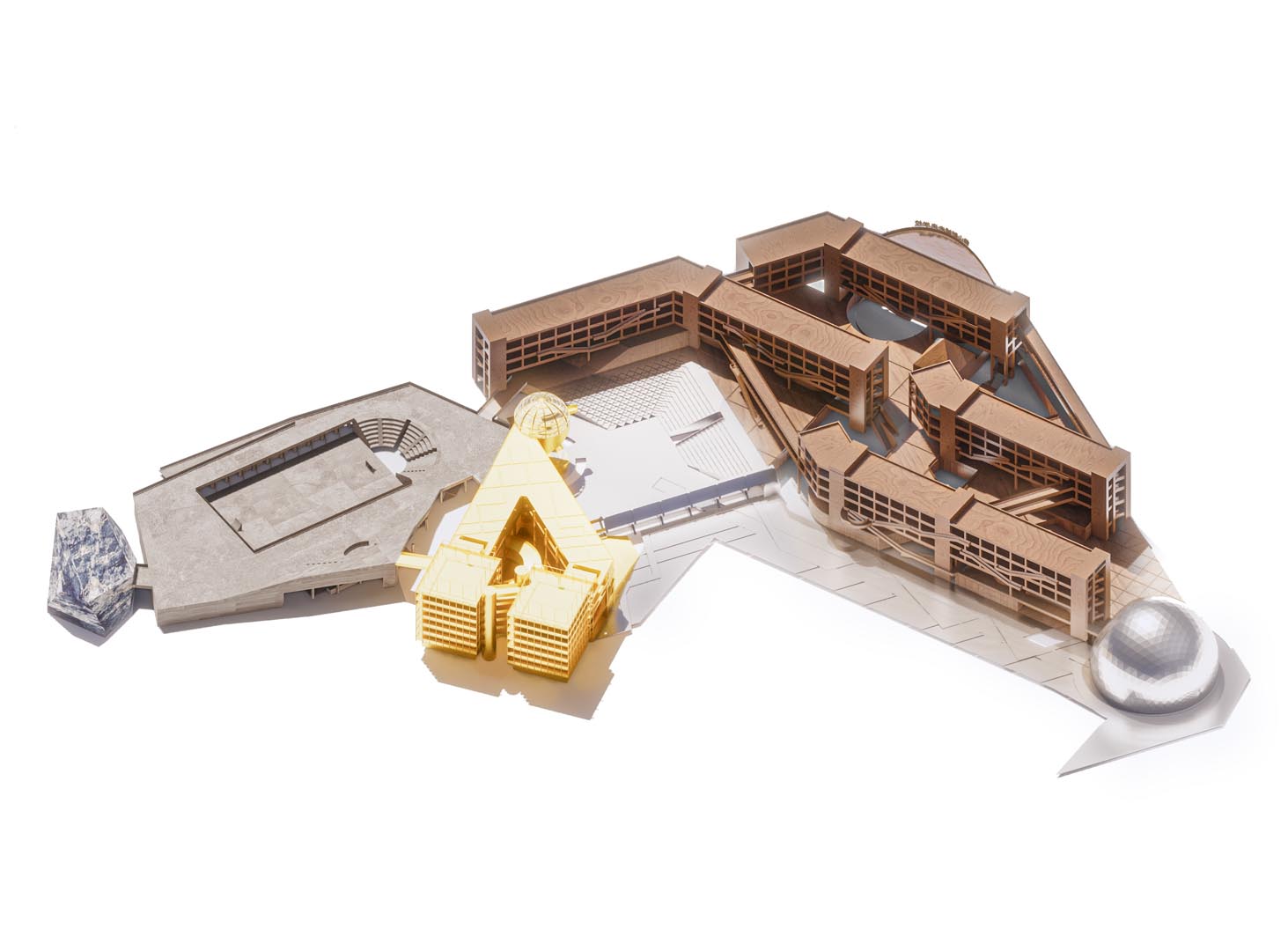
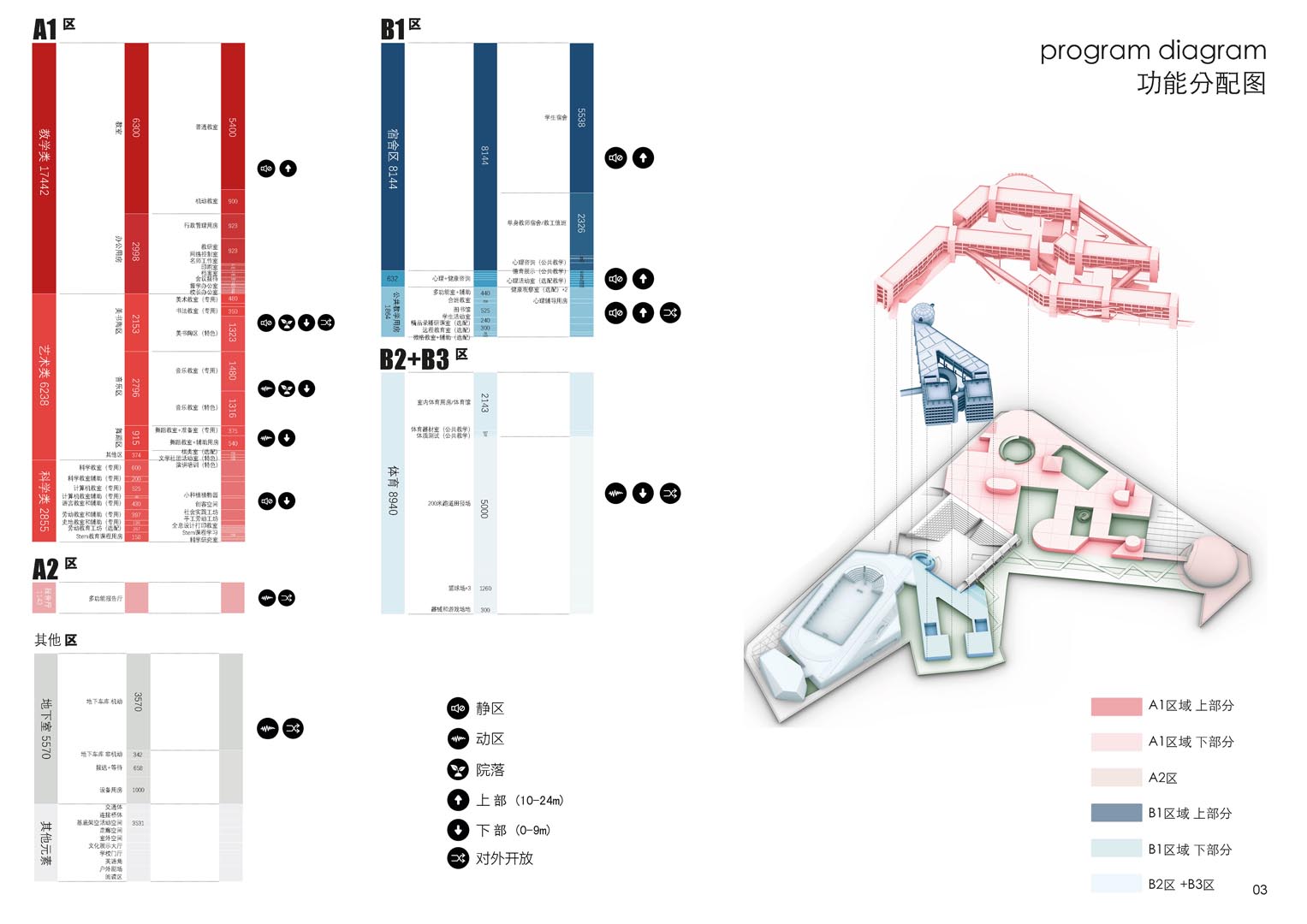
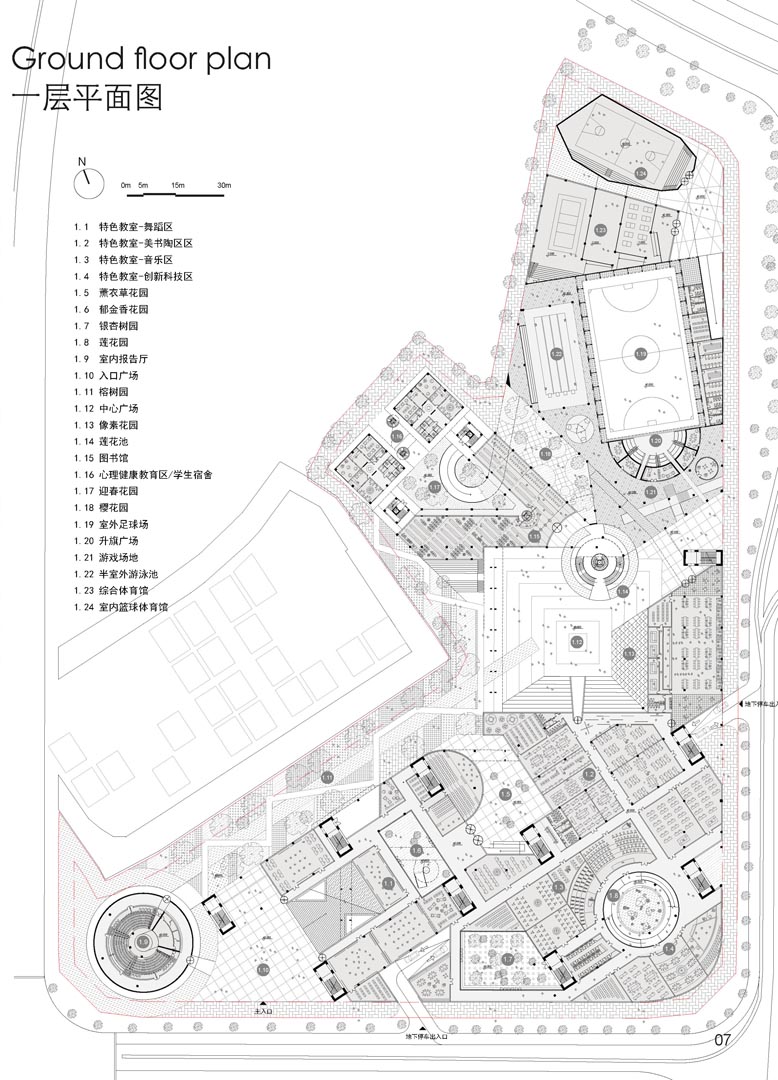
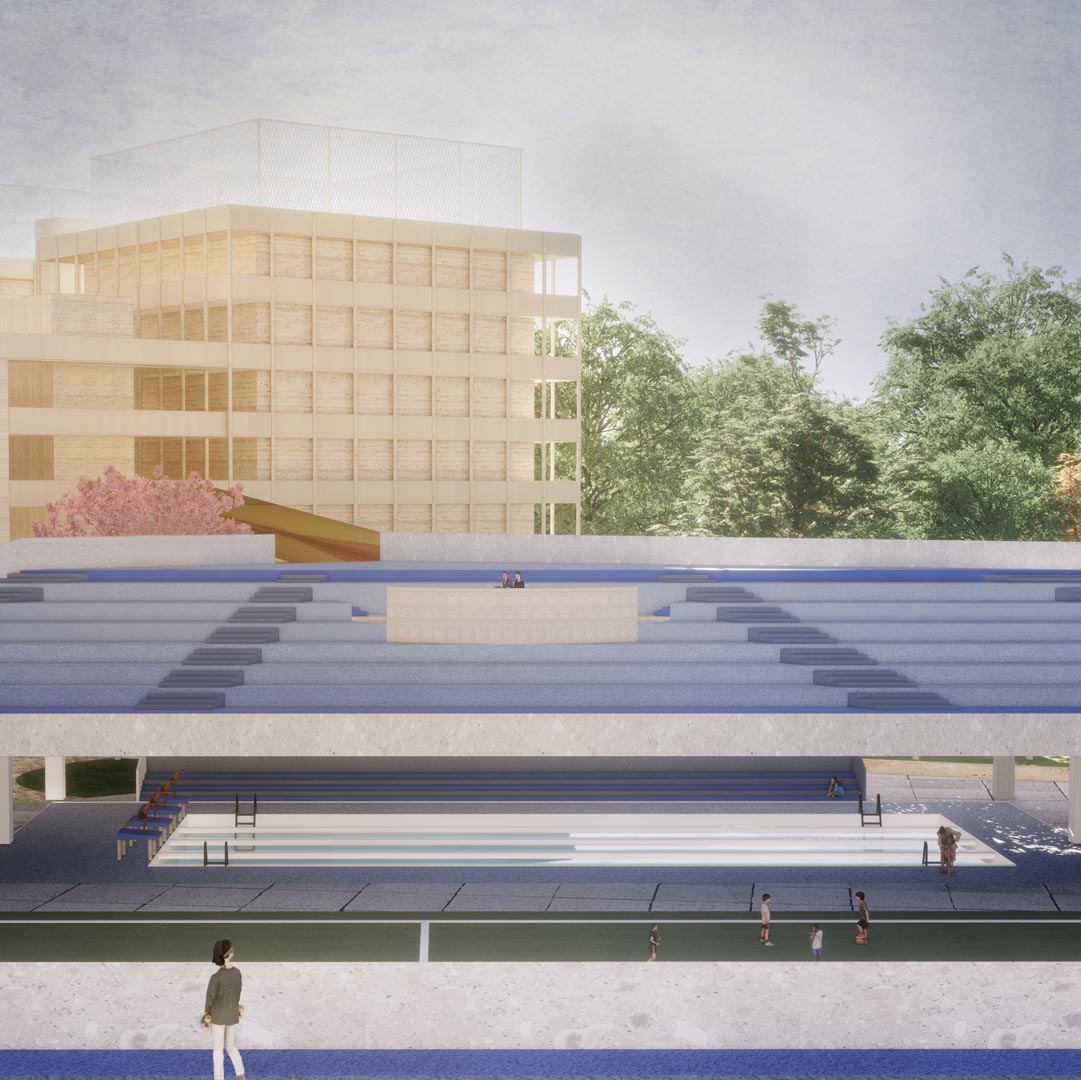
Funtopia interconnects all ground-floor spaces. The southern Zone A houses specialized interest-based teaching spaces, such as art studios, music rooms, and dance studios, serving as the foundation (Zone A1). These are interspersed with gardens, plazas, and parks, all connected via a central square to the northern library and sports field areas. An elevated running track layer shelters various play and sports spaces underneath, providing shaded and rain-protected facilities such as a semi-outdoor swimming pool and basketball courts. The second-floor platform, as an elevated layer, offers additional activity grounds and semi-outdoor sheltered spaces, creating a double-layered public platform that ensures north-south accessibility. This forms a diverse combination of indoor, semi-outdoor, and outdoor spaces. Traditional classrooms are located from the third floor upward.

E. Funtopia for Connection
The physical connectivity of Funtopia is achieved through the north-south linkage on the first and second floors, as well as the 3.5-meter-wide outdoor activity platforms on the third floor of the teaching building. More importantly, we aim for students’ learning methods to be diversely connected with social activities. The establishment of various interest clubs enriches the learning experience and equips students with greater social adaptability. The realm of learning is thus expanded into a broader horizon.

F. Funtopia for Free and Fun
Ultimately, Funtopia aims to promote exploratory learning through playful engagement. A free individual spirit needs guidance and nurturing. During children’s developmental stages, exploring one’s own way of living is most important. Cultivating independent thinking and the ability to choose from a wider knowledge base means finding freedom through joy—creating their own vibrant, colorful dreams.

Subscribe to our newsletter

The easiest way to know about our projects, exhibitions, publications, job openings, and more.